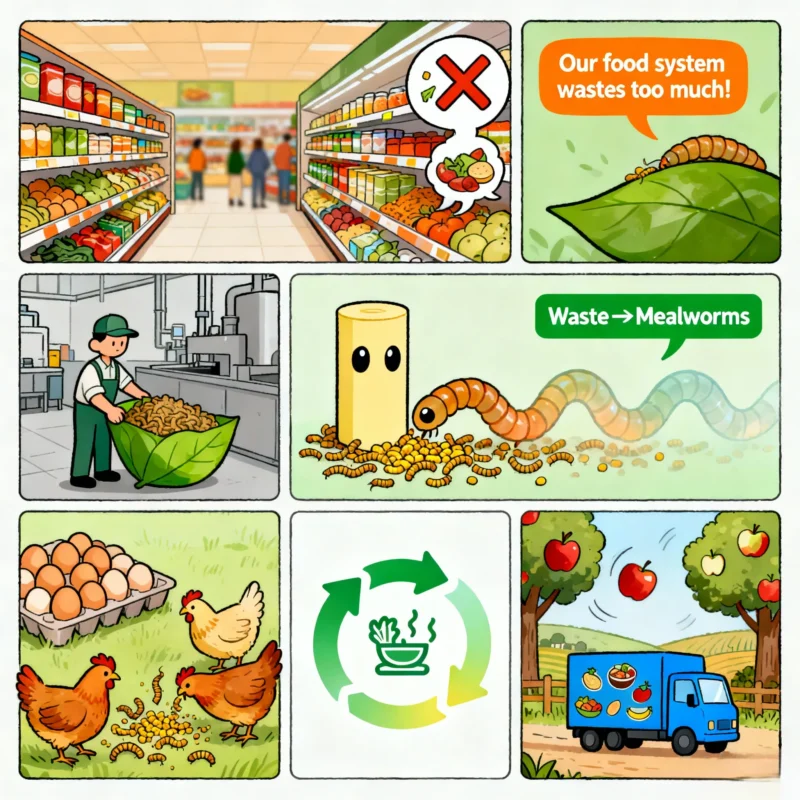
Recently, I sat down with other chicken keepers at the farm, and we had a lively debate about mealworms. Some complained, “They’re way too expensive!” But others raved about them, calling them a “secret weapon for healthy hens.” The truth is, most people just aren’t using mealworms the right way;when you get it right, they don’t waste your money. Instead, they make chicken-keeping easier and more rewarding.
I still remember the first time I tried feeding mealworms for chickens. Within a week, I noticed a huge difference in their eggs: the yolks turned a richer golden color, and the shells got thicker—so thick, they barely cracked if I dropped one by accident. Later, I looked into why, and found out mealworms have the perfect balance of protein and calcium-phosphorus for laying hens. It’s way more effective than just pouring grain into their feeders. But here’s the key tip: don’t only feed live mealworms—mix in some dried mealworms too. Live ones make the chickens scratch and peck around, keeping them active and happy. Dried mealworms? They last forever, mix right into regular feed, and never get moldy—even during those rainy summer weeks.
Feeding Mealworms to Chickens
Lots of people ask me if mealworms and chickens are a good match. My answer? It all depends on how you feed them. I sprinkle a small handful every afternoon,just enough to make the chickens run over excited, but not so much that they stop eating their regular feed. For my laying hens, I add bulk mealworms twice a week. Buying in bulk saves money, and I order mine from a reliable supplier,they have flexible bulk options, and even offer discounts for regular customers.
A friend once panicked and asked me, “Are feeder mealworms safe?” I told her not to worry,you just need to pick a supplier with clear quality checks. The one I use shares all their certifications upfront; everything from their breeding environment to their processing steps is transparent, and they even let you get samples to test with your chickens first. My chickens have been eating their mealworms for six months, and I’ve never had a single issue with upset tummies.
Last month, another chicken keeper shared her mealworm success on a community forum,she even posted before-and-after photos of her eggs. Before feeding mealworms, the yolks were pale and the shells thin; after a month, the yolks turned bright orange, and the shells got sturdier. She also said her chickens’ feathers looked shinier than ever,they just looked healthier overall. Now, my hens lay steadily even in winter, and they rarely get sick. I swear, it’s all thanks to the great nutrition from the mealworms.
If you’re on the fence about adding this “little treat” to your chickens’ diet, take my advice and try mealworms. I went from being skeptical to totally hooked!