Let’s be honest — “which protein source is better” is the kind of question that usually gets a carefully worded non-answer. Something like: “Both have their advantages depending on your specific application and budget considerations.”
That is not what this article is.
We produce mealworms. Tens of thousands of tons of them. So yes, we have a perspective. But we also work with customers across aquaculture, poultry, and pet food industries who have tried both — and the comparison is more nuanced than most people expect. Fish meal is not dead. Mealworm protein is not a miracle. But the data tells a pretty clear story about where things are heading.
Let’s get into it.
Nutritional Comparison
The numbers first.
| Nutrient | Defatted Mealworm Powder | Standard Fish Meal (65% grade) |
|---|---|---|
| Crude Protein | 60–70% | 60–72% |
| Fat Content | 5–10% (defatted) | 8–12% |
| Amino Acid Profile | Complete; high in lysine, methionine | Complete; high in lysine |
| Digestibility | 75–85% | 85–92% |
| Chitin Content | 4–8% | None |
| Omega-3 (DHA/EPA) | Low–Moderate | High |
| Moisture | ≤10% | 8–12% |
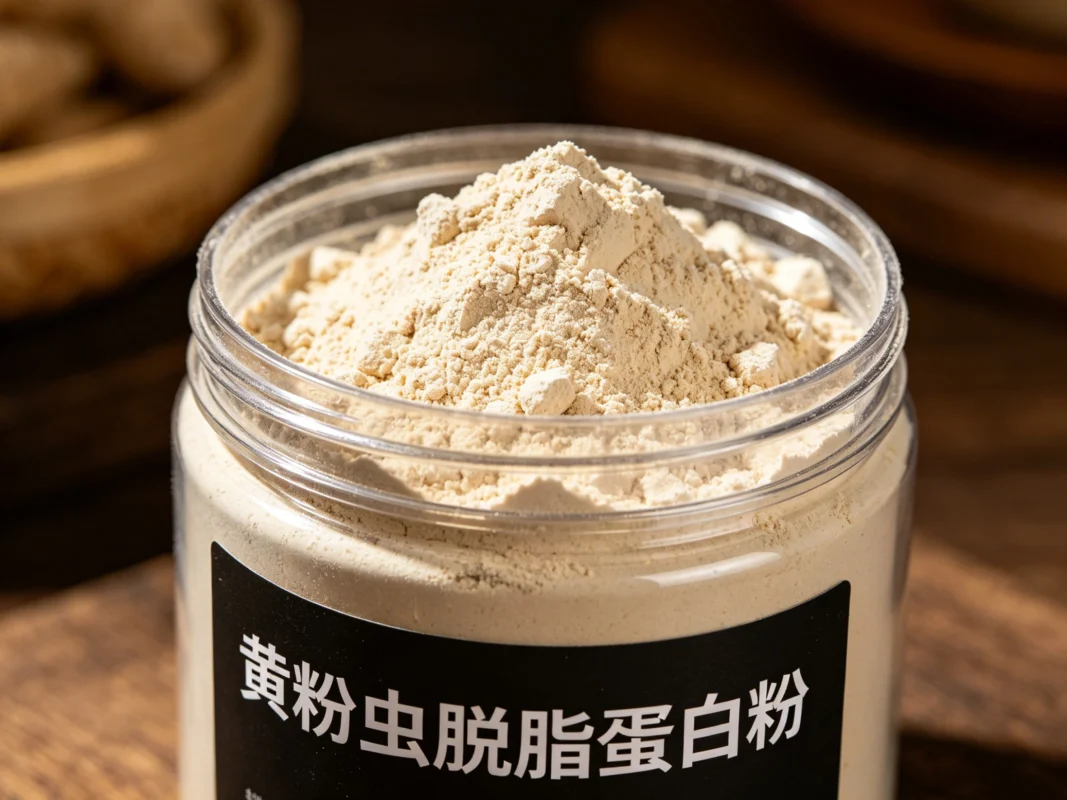
On raw protein content, they are essentially tied. A high-quality defatted mealworm protein powder sits at 60–70% crude protein — directly comparable to standard fish meal grades used in commercial feed production.
Where it gets interesting is the amino acid composition. Both sources provide a complete amino acid profile, which matters enormously in animal nutrition. Fish meal has a long track record in aquaculture specifically because its amino acid ratios closely match what fish need. Mealworm protein holds up surprisingly well here — lysine and methionine levels are competitive, and several studies have shown full or partial replacement of fish meal with mealworm protein at 25–50% inclusion rates with no measurable drop in growth performance.
But fish meal wins on one specific point: omega-3 fatty acids. DHA and EPA levels in fish meal are significantly higher, which matters most in species-specific aquaculture (salmon, tuna, sea bass) where fatty acid composition affects final product quality for human consumption.
Mealworm protein, on the other hand, brings something fish meal simply cannot: chitin. Even in defatted powder form, residual chitin content acts as a natural gut health stimulant — promoting beneficial gut microbiota, reducing pathogen load, and improving feed conversion ratios in poultry and some fish species. This is not a marketing claim. It is backed by peer-reviewed research in Animal Feed Science and Technology and Poultry Science.
Nutritional verdict: Near tie on protein. Fish meal edges ahead on omega-3. Mealworm protein has the chitin advantage and competitive amino acid profile.
Sustainability — And This Is Where It Gets Uncomfortable for Fish Meal
Let’s talk about what fish meal actually is.
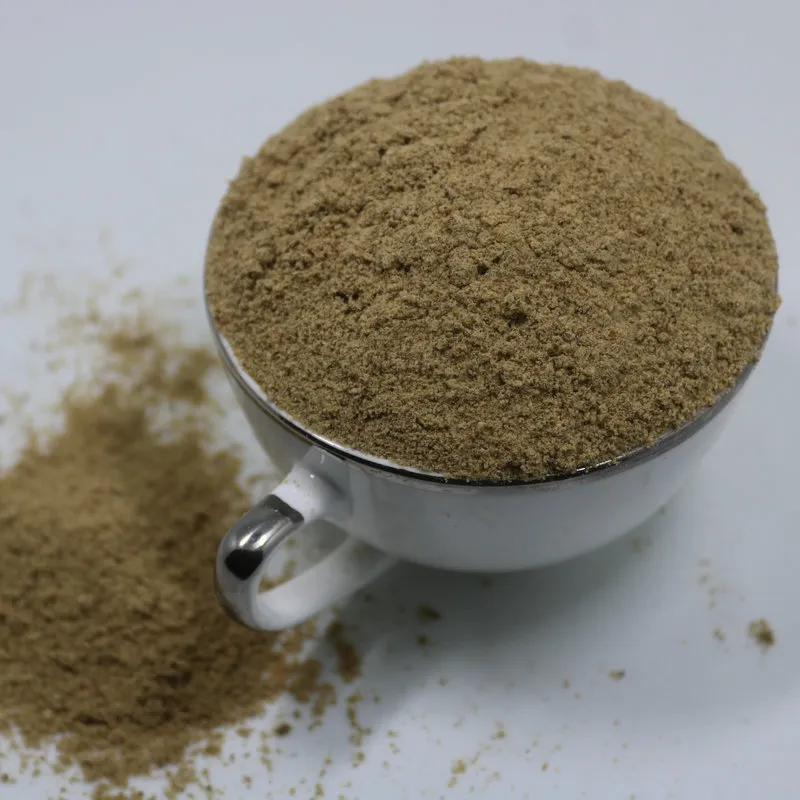
Fish meal is made primarily from forage fish — anchovies, sardines, herring, menhaden — species that form the base of marine food chains. Global fish meal production consumes roughly 18–20 million tons of wild-caught fish annually (FAO, 2023). Approximately 70% of those fish are used not for direct human consumption but for feed production.
Marine biologists have been raising alarms about forage fish population stress for decades. Peru’s anchovy fishery — the single largest source of fish meal raw material globally — has experienced multiple catastrophic collapses tied to overfishing combined with El Niño events. Every time it collapses, fish meal prices spike globally, feed costs for aquaculture operations jump, and smaller producers take the hit hardest.
The supply is finite and increasingly unpredictable. That is simply a fact.
Now compare mealworm production.
Mealworm larvae can be raised on agricultural byproducts — wheat bran, vegetable waste, grain residues. They require significantly less land and water than conventional livestock protein sources. The carbon footprint per kilogram of mealworm protein is estimated at 1–2.7 kg CO₂ equivalent, compared to 5–13 kg CO₂ equivalent for fishmeal production when fishing, processing, and transport are included (Journal of Cleaner Production, 2022).
Mealworm farming also generates zero bycatch — a persistent environmental cost of industrial fishing that is rarely factored into feed sourcing decisions.
The EU formally approved Tenebrio molitor as a novel food ingredient in 2021 and as an authorized feed material for aquaculture in 2017. Regulatory momentum is moving in one direction.
Sustainability verdict: Mealworm protein wins. It is not particularly close.
Cost — The Part Everyone Cares About But Nobody Likes Talking About
Here is the reality check.
Right now, in 2024–2025, fish meal is cheaper than mealworm protein powder in most markets. Standard 65% protein fish meal trades at roughly USD 1,400–1,800 per ton on international markets (with significant volatility). Defatted mealworm protein powder from established manufacturers currently sits at USD 2,500–4,000 per ton depending on specification, volume, and origin.
That gap is real. Anyone who tells you otherwise is either misleading you or operating in a very unusual market.
But there are a few important things to layer onto that number.
Fish meal prices are volatile in a way that mealworm prices are not. When anchovy harvests in Peru are poor, fish meal prices can spike 40–60% within a single quarter. Feed manufacturers who rely exclusively on fish meal absorb that volatility directly. Mealworm protein pricing is more stable because it is not tied to a single geographic fishery or seasonal catch cycle.
Feed conversion efficiency changes the math. In several documented poultry and aquaculture trials, mealworm-inclusive diets showed improved feed conversion ratios (FCR) of 5–12% compared to fish meal-only diets. If you are using less feed to achieve the same growth outcome, the effective cost per kilogram of gain narrows considerably.
Volume changes the price. Industrial-scale buyers sourcing mealworm protein at container volumes see substantially different pricing from spot-market rates. This is an emerging industry, and pricing is moving.
The honest take: if you are buying protein today purely on spot price, fish meal is likely still cheaper. If you are thinking about supply chain stability, regulatory trajectory, and 5-year cost predictability, the calculation starts to look different.
Cost verdict: Fish meal wins on current spot price. Mealworm protein wins on price stability and long-term trajectory.
Application Scenarios — Who Should Actually Use What
This is probably the most practically useful section, so let’s be direct.
Use mealworm protein powder when:
- You are producing premium pet food or functional animal feed where sustainability credentials and ingredient transparency matter to your end customer.
- You are in poultry or swine feed and want to reduce antibiotic use — chitin’s natural pathogen-suppressing effect on gut health is well-documented in these species.
- Your operation is in the EU or UK where regulatory pressure on fish meal inclusion rates is tightening and “sustainable protein” is not a marketing term but a compliance consideration.
- You want supply chain predictability and cannot absorb the price volatility of fish meal markets.
- You produce specialty aquaculture species (shrimp, tilapia, catfish) that respond well to insect protein inclusion without requiring high DHA/EPA levels.
Stick with fish meal (or blend it) when:
- You raise salmonid species (salmon, trout) where omega-3 fatty acid composition in the flesh is directly tied to product value and consumer expectation.
- You are operating in markets where price is the primary purchasing driver and sustainable sourcing carries no price premium with your buyers.
- You need maximum digestibility in species with sensitive digestive systems, where fish meal’s 85–92% digestibility is genuinely difficult to match.
The blend approach — what most serious operators are actually doing:
The majority of large-scale commercial feed producers we work with are not making a binary choice. They are replacing 25–50% of their fish meal inclusion with mealworm protein powder, capturing the cost stability and sustainability benefits while maintaining the omega-3 and digestibility profile of a fish meal base. This is where the industry is practically positioned today, regardless of what any single supplier tells you.
So, Which One Is Better?
Depends on what you mean by “better.”
On paper nutritional profile: effectively tied, with fish meal holding the omega-3 edge and mealworm protein holding the chitin and gut health edge.
On environmental impact: mealworm protein, clearly.
On current purchase price: fish meal.
On supply reliability and 5-year cost outlook: mealworm protein.
On regulatory momentum in major markets: mealworm protein.
The feed industry spent 30 years treating fish meal as the gold standard because it worked and it was available. Both of those conditions are becoming less reliable. The transition to insect-based protein in commercial feed is not a trend piece — it is an infrastructure shift that is already underway.
Whether you are at the front of that shift or the back of it is a business decision. But the direction is not really in question anymore.
If you want to run a trial inclusion in your feed formulation, we can provide specification sheets, third-party lab reports, and samples.