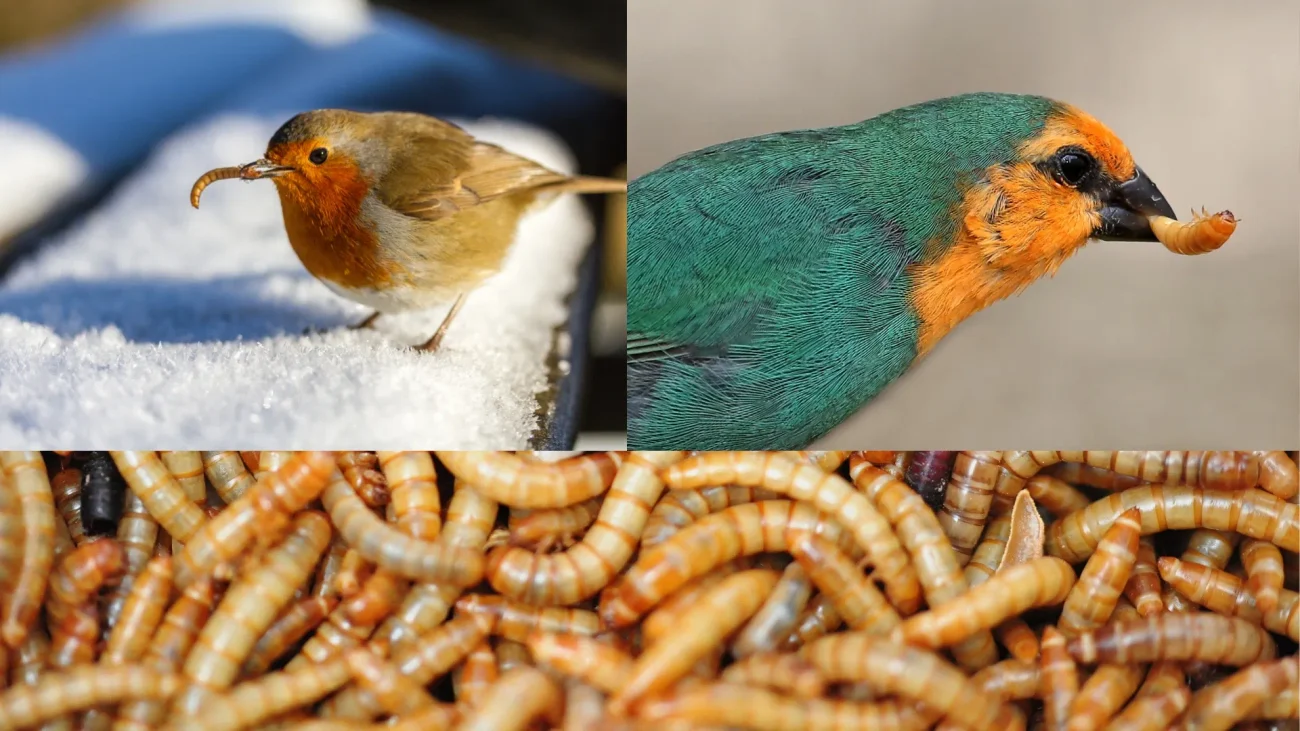
Whether you are attracting bluebirds to your backyard, nurturing a breeding parrot, or formulating premium commercial bird feed, one ingredient consistently stands out: mealworms for birds. Packed with essential nutrients and irresistible to avian palates, mealworms have become the gold standard in avian nutrition.
In this comprehensive guide, we break down the science behind mealworms and provide actionable advice for three key audiences: wild bird enthusiasts, pet bird owners, and bird feed manufacturers.
1. The Nutritional Powerhouse: Why Birds Need Mealworms
Mealworms (Tenebrio molitor) are not just a treat; they are a functional food. Their nutritional profile directly supports critical biological functions in birds.
High Protein Content (50%+ Dry Basis): Essential for muscle development, feather regeneration during molting, and egg production.
Optimal Fat Levels: Provides sustained energy, especially crucial during migration, cold winters, and breeding seasons.
Rich in Amino Acids & Minerals: Contains methionine, lysine, calcium, and phosphorus, which are often deficient in seed-only diets.
2. For Wild Bird Enthusiasts: Attracting & Sustaining Backyard Flocks
Using mealworms for birds is the single most effective way to turn your yard into a bird sanctuary.
Live vs. Dried Mealworms: Which to Choose?
| Feature | Live Mealworms | Dried Mealworms |
| Attraction Power | Movement triggers instinct | Scent-based |
| Shelf Life | Weeks (requires refrigeration) | Years (pantry storage) |
| Best For | Nesting season, picky eaters | Year-round feeding,convenience |
| Cost | Higher | Lower (especially bulk) |
Feeding Strategy: Use platform feeders or specialized bluebird feeders to prevent larger, aggressive birds from monopolizing the mealworms. Offer them in the morning when birds are most active.
3. For Pet Bird Owners: Safe Supplementation Guidelines
For parrots, chickens, and reptiles, mealworms serve as a vital dietary supplement rather than a staple.
Gut-Loading is Key: Always feed mealworms nutritious vegetables (carrots, sweet potatoes) 24 hours before offering them to your pet. This transfers micronutrients directly to your bird.
Portion Control: Mealworms should constitute no more than 5-10% of a pet bird’s total diet to prevent obesity and calcium imbalance.
Hydration Bonus: Live mealworms provide supplementary moisture, beneficial for birds that don’t drink frequently.
4. For Bird Feed Manufacturers: Sourcing & Formulation Insights
As consumer demand for natural, high-protein bird products surges, integrating mealworms for birds into your product line offers a significant competitive advantage.
Why Add Mealworms to Commercial Feed?
- Premium Positioning: Products featuring visible whole or chopped mealworms command higher price points and perceived value.
- Clean Label Trend: Mealworms satisfy the growing demand for recognizable, non-synthetic protein sources.
- Palatability Enhancement: Even small inclusion rates (3-8%) dramatically improve feed acceptance and reduce waste.
B2B Sourcing Considerations
Consistency: Partner with suppliers who guarantee uniform size and moisture content (<8% for dried).
Safety Certifications: Ensure HACCP, FDA compliance, and Salmonella testing protocols are in place.
Scalability: Verify supply chain capacity for both trial batches and full-scale production runs.
Insects require a fraction of the land, water, and feed compared to traditional protein sources. With an annual output of 6,000 tons and 180 acres of breeding bases, GreenFut provides the scale to make your supply chain genuinely sustainable.
Because Heze Green Future uses industrial microwave drying and strict microbial control, our mealworms are free from pathogens, molds, and chemical residues. Every batch is FDA and ISO22000 certified — clean, consistent, and safe for the most vulnerable birds.